Which stablecoins are actually legal in the EU?
25 firms in 14 countries may issue stablecoins under MiCA, from Circle and Société Générale to small payment firms. Tether, the world’s largest, is not one of them.
- 25
- Firms registered to issue e-money tokens under MiCA, 30 October 2026
- 50
- White-paper entries on the register (some tokens appear twice)
- 0
- Asset-referenced token issuers authorised in the EU
- 57%
- Circle’s EURC share of euro stablecoins in circulation, 3 November 2026
Key findings
- ESMA’s interim MiCA register lists 25 e-money token (EMT) issuers in 14 countries, with 50 white-paper entries, as of 30 October 2026; France has the most issuers (6).
- Circle’s USDC and EURC are authorised through its French entity; Tether’s USDT, the largest stablecoin in the world, is not authorised under MiCA.
- No issuer of an asset-referenced token, a stablecoin backed by a basket of assets, has been authorised in the EU.
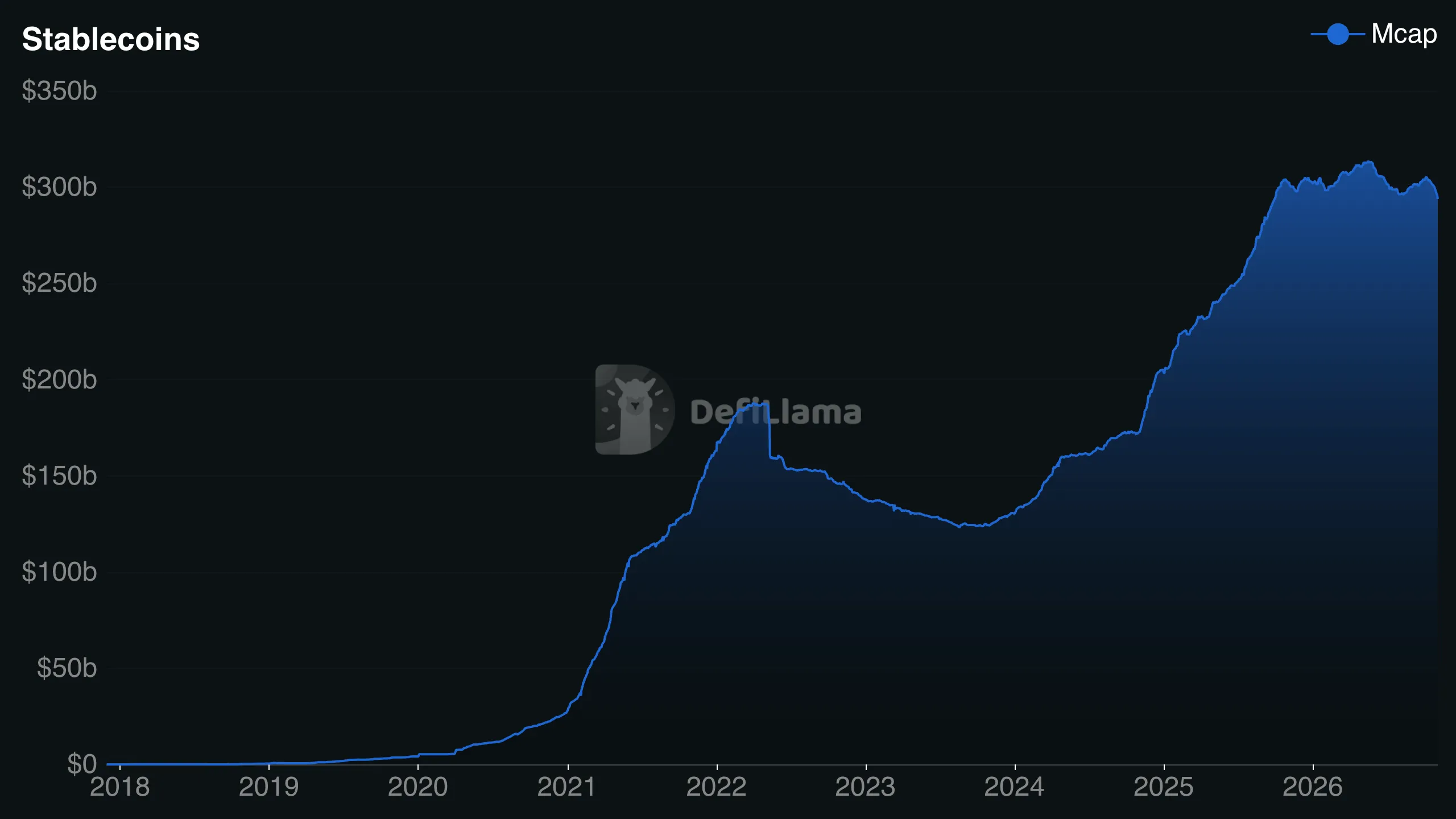
There are about $290 billion of stablecoins in circulation worldwide; Tether’s USDT and Circle’s USDC alone account for about $250 billion. In the European Union, only a short list of them can be offered to the public. Since MiCA’s stablecoin rules took effect on 30 June 2024, any token pegged to a single currency must be issued by a bank or an authorised e-money institution that has filed a white paper with its regulator.
By 30 October 2026, ESMA’s interim register listed 25 such issuers in 14 countries, with 50 white-paper entries between them. The largest stablecoin in the world, Tether’s USDT, worth about $179 billion, is not on it.
Small states keep their true size: hover or tap the ring to magnify. Cyprus: data cover only the areas under the effective control of the Government of the Republic of Cyprus. Boundaries © EuroGeographics; Cyprus lines: Natural Earth.
- 6
- 4–5
- 3
- 2
- 1
- No issuer
Click a country on the map, or pick one here.
Off the map: Iceland (EEA), 1 issuer: Monerium (EURe), supervised by the Central Bank of Iceland.
6 issuers
- Circle Internet Financial EuropeTokens: USDC, EURC
- Société Générale-ForgeTokens: EURCV, USDCV
- Schuman Financial (Salvus)Tokens: EURØP
- Oddo BHFTokens: EUROD
- OuiTrust (HEURO SAS)Tokens: HEURO
- CACEIS BankTokens: EURXT
3 issuers
- Banking CircleTokens: EURI
- AIEU ServicesTokens: BREUR, BRUSD, BRGBP
- Bridge Building (Stripe’s Bridge)Tokens: EURR, distributed by Revolut
3 issuers
- Quantoz PaymentsTokens: EURQ, USDQ, EURD, PLNQ, GBPQ, RONQ
- Fiat RepublicTokens: ENEUR, ENUSD, ENGBP
- AplauzTokens: WEUR
2 issuers
- BLUE EMI LTTokens: BLUEUR
- NewrailsTokens: EURW
2 issuers
- StablRTokens: EURR, USDR
- Stable mintTokens: EURSM, USDSM
1 issuer
- Payment Corporation (Stable Labs)Tokens: CZKI
1 issuer
- EurodollarNo token named in the white paper
1 issuer
- Paxos Issuance EuropeTokens: USDG, EUROe, eUSD
1 issuer
- AllUnityTokens: EURAU, USDAU, CHFAU, SEKAU
1 issuer
- GR8 PAYTokens: EUR.PA, USD.PA
1 issuer
- StaBillonNo token named in the white paper
1 issuer
- Bison BankTokens: EUB, USB
1 issuer
- DinaroTokens: EURGH
What makes a stablecoin legal
MiCA calls a stablecoin tied to one currency an e-money token. The rules are close to those for electronic money in a payment app, and they are strict on the points that matter when a stablecoin fails.
The second kind of stablecoin in MiCA, the asset-referenced token, is backed by a basket of currencies, commodities or crypto. No issuer of one has been authorised anywhere in the EU; ESMA’s register for them is empty. Tokens that try to hold their peg by algorithm alone, without reserve assets, cannot be authorised as either kind of stablecoin.
Most of these tokens are tiny. Euro stablecoins as a whole were worth €790 million on 3 November, roughly 0.3% of the stablecoin market, and Circle’s EURC alone was 57% of that. The list is long because MiCA made issuing a stablecoin a regulated business that banks and payment firms can enter, not because Europeans use many of them.
Why Tether isn’t there, and what that means
Tether is not authorised as an e-money token issuer anywhere in the EU. In December 2024 it invested in StablR, one of the authorised issuers, rather than seeking a licence for USDT. On 17 January 2025, ESMA and the European Commission told national regulators to make sure crypto firms stopped offering non-compliant stablecoins by the end of March 2025. Major exchanges serving the EU removed USDT trading for European customers.
USDT is illegal in the EU.
Holding it is legal. EU-licensed platforms can’t offer it for trading, because Tether has no MiCA authorisation.
A MiCA stablecoin has to be in euros.
An e-money token can track any official currency. USDC, USDG and AllUnity’s USDAU are dollar tokens authorised in the EU.
Basket-backed stablecoins are banned.
MiCA allows them as asset-referenced tokens, but no issuer of one has been authorised so far.
Authorisation guarantees the reserves.
MiCA sets reserve, safeguarding and redemption rules and supervisors enforce them; it is not a state guarantee.
That does not make holding USDT illegal. A European can still keep it in a self-hosted wallet or use it outside the EU. What changed is that a licensed European platform cannot sell it to them. For the world’s most-used dollar stablecoin, Europe is now a market it serves only at arm’s length, and USDC, through Circle’s French licence, is by far the largest dollar token that EU platforms can list.
Questions readers ask
Which stablecoins are MiCA-compliant?
Those issued by the 25 e-money token issuers on ESMA’s interim register, including Circle (USDC, EURC), Société Générale-Forge (EURCV, USDCV), Paxos (USDG), Quantoz (EURQ, USDQ), AllUnity (EURAU), Banking Circle (EURI), StablR (EURR, USDR), Bridge, Stripe’s stablecoin firm (a separate EURR, distributed by Revolut) and Monerium (EURe).
Is USDT legal in the EU?
Tether is not authorised as an e-money token issuer under MiCA. Following ESMA guidance, EU crypto-asset service providers stopped offering USDT for trading by the end of March 2025, although holding it is not illegal.
How many stablecoin issuers are authorised under MiCA?
25 e-money token issuers in 14 countries were on the register, with 50 white-paper entries, on 30 October 2026, according to ESMA’s interim register. No asset-referenced token issuer has been authorised.
Which EU country has the most stablecoin issuers?
France, with six e-money token issuers, including Circle and Société Générale-Forge. Luxembourg and the Netherlands have three each; 14 EU countries have none.
How we did this
Issuers and white papers are from ESMA’s interim MiCA register file for e-money token white papers (EMTWP), cross-checked against CASP Tracker’s list as of 1 November 2026. Duplicate register rows are counted once. Tickers are as given in white papers; where a white paper names none, we leave it blank. Iceland’s Monerium is included because MiCA applies across the European Economic Area.
Corrections
- : Fact-check: the euro stablecoin total and EURC’s share now use 3 November figures (€790 million, 57%); “50 white papers” is now “50 white-paper entries”, as some tokens appear twice in ESMA’s register; the ESMA guidance date and wording were made exact; USDC is described as the largest, not the only, dollar token EU platforms can list.
- : Bridge Building, the Luxembourg issuer owned by Stripe’s Bridge, was listed with no token. It issues EURR, the euro stablecoin distributed by Revolut; StablR in Malta issues a different token with the same ticker.
Sources
- ESMA: interim MiCA register (e-money token white papers file)
- CASP Tracker: list of MiCA e-money tokens (1 November 2026)
- ESMA and European Commission: guidance on non-MiCA-compliant ARTs and EMTs
- EUR-Lex: MiCA, Regulation (EU) 2023/1114
- eurostablecoins.xyz: euro stablecoin market cap
- DefiLlama: stablecoin market caps
The tables behind our charts are in the Data Room. To cite this article: Jake Aquilina, “Which stablecoins are actually legal in the EU?”, Signal and Noise, 3 November 2026, https://signalandnoise.xyz/stories/eu-legal-stablecoins/.